
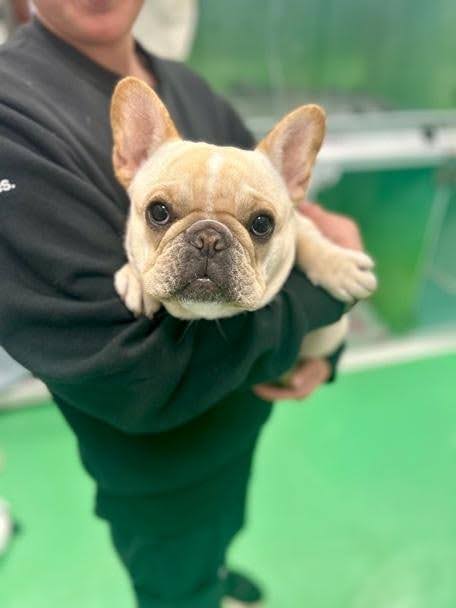
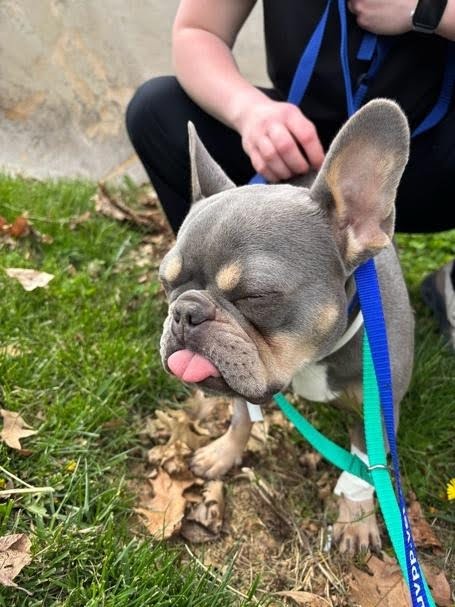
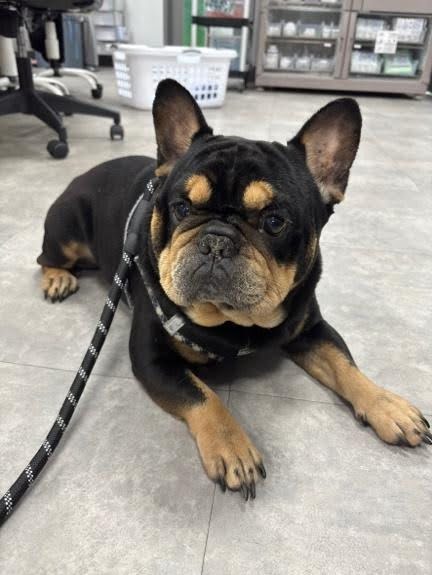
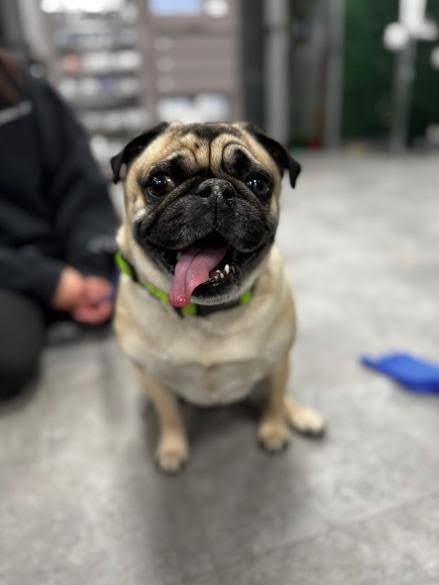
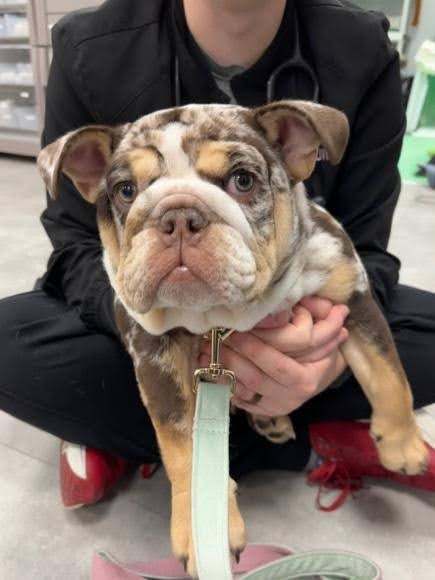
Brachycephalic obstructive airway disease involves multiple anatomic changes that only affect brachycephalic patients. Brachycephalic means “short-headed.” Common examples of brachycephalic dog breeds include the English bulldog, French bulldog, Pug, Pekingese, and Boston terrier. These dogs have been bred to have short muzzles and noses and, because of this, the throat and breathing passages in these dogs are frequently undersized or flattened. Persian cats are also affected.
Frequently Asked Questions About BOAS
What is Brachycephalic Obstructive Airway Syndrome (BOAS)?
BOAS is a combination of anatomic abnormalities in short-nosed breeds that make it physically harder for a dog or cat to breathe. Some of these abnormalities include an elongated soft palate, narrowed nostrils, and a too-small windpipe.
Which breeds are affected by BOAS?
English Bulldogs, French Bulldogs, Pugs, Pekingese, Boston Terriers, and Persian cats are among the most commonly affected breeds due to their short-muzzled anatomy.
What are the signs of BOAS?
Common signs include loud snoring, snorting, or stridor (a high-pitched whistling sound), labored breathing, exercise or heat intolerance, gagging or coughing, blue-tinged gums or tongue, collapse, and frequent vomiting or regurgitation.
Is loud snoring or snorting normal in brachycephalic dogs?
No. While extremely common in these breeds, snoring and snorting are signs of airway obstruction, not a normal trait of the breed, and should be evaluated by a veterinarian.
Is BOAS an emergency?
BOAS can become a medical emergency if a pet shows severe difficulty breathing, blue or pale gums, collapse, or an inability to cool down in the heat. These signs require immediate veterinary attention at an emergency hospital.
Can BOAS be treated without surgery?
Mild cases may be managed with lifestyle changes — weight management, harness use instead of a collar, avoiding heat and overexertion, and calming medications like trazodone. However, many dogs eventually need surgery to correct the underlying anatomy and prevent progression to laryngeal collapse.
What surgery is used to treat BOAS?
The most common procedures include soft palate shortening, widening the nostrils (stenotic nares correction), and removal of everted laryngeal saccules. These are often performed together during one surgery.
What is the prognosis after BOAS surgery?
Prognosis is generally excellent in young dogs, who often show significantly improved breathing and activity levels. Older dogs or those with advanced laryngeal collapse have a more guarded prognosis.
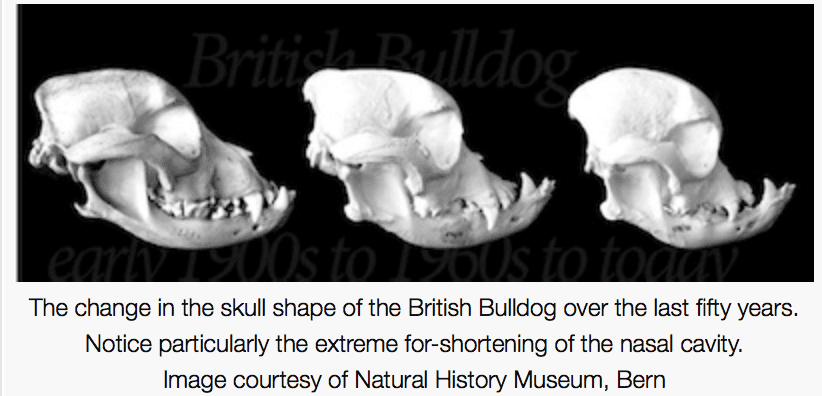
Primary anatomic changes include elongated soft palate, stenotic nares, aberrant nasal conchae (additional turbinates within the nose), redundant nasopharyngeal tissue (additional soft tissue inside the nasopharynx), macroglossia (the tongue being too big for the size of the head), hypoplastic trachea (too small wind pipe for the size of the patient – this is most pronounced in English Bulldogs), and bronchial collapse.
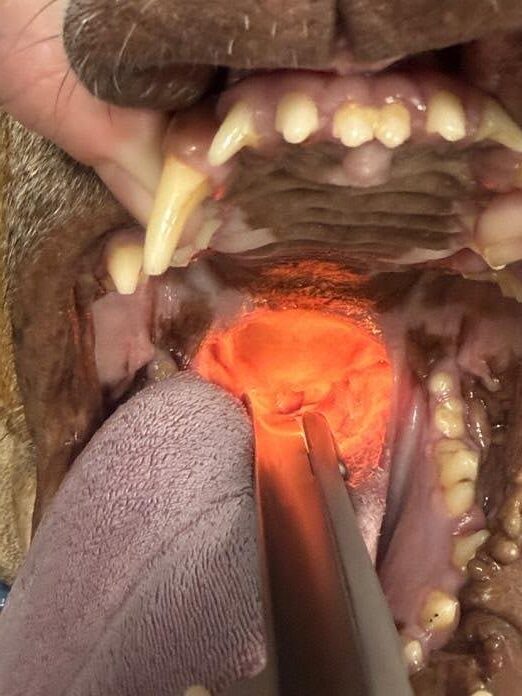
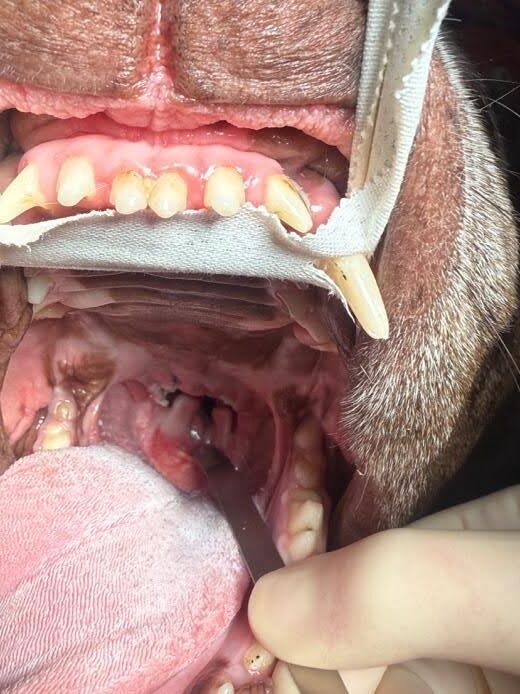
Elongated soft palate before (left) and after surgical shortening (right).

Normal nares on the left, followed by varying degree of stenotic nares towards the right. (Photo credit Tobias & Johnston Veterinary Surgery Small Animal)
Aberrant turbinates can be found in the front of the nose (rostral abbernat turbinates – RAT). This finding is most commonly noted in Pugs (up to 90.9%) and less commonly in French Bulldogs and English Bulldogs (56.4% and 36.4% respectively.
Aberrant turbinates in the back oft he nose (caudal aberrant turbinates – CAT), are found equally in all three of the above mentioned breeds.
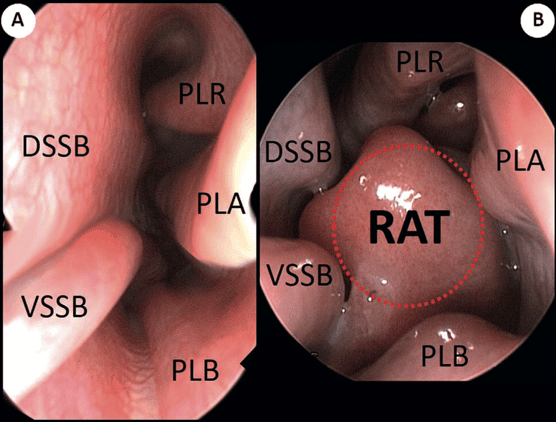
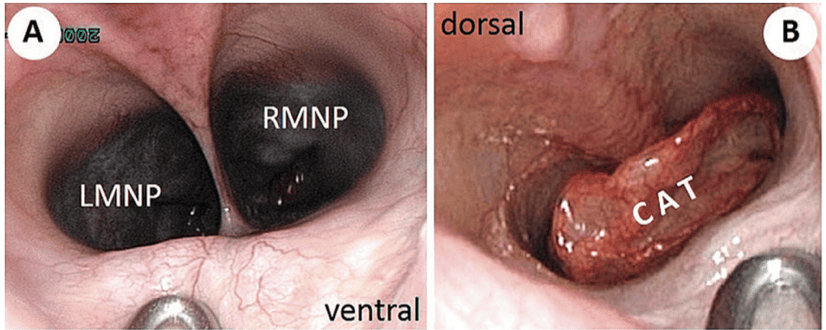
A: normal nosed dog, B: brachycephalic dog (photo credit: Oechtering et al.)
Due to the upper airway obstruction brachycephalic patients create negative pressure as they try to breathe in and suck in air. This leads to secondary changes and can lead to gastritis (inflammation in the stomach) and other gastrointestinal symptoms due to swallowing air.
Secondary changes include tonsillar eversion (while the tonsils typically sit in crypts, negative pressure often causes the tonsils to sit outside of the crypt and partially occlude airflow), laryngeal/mucosal edema, everted laryngeal saccules (these are little tissue folds by the voice box, called the larynx, that also fall into the airway), and laryngeal collapse (collapse of the cartilages and soft tissues of the voice box).
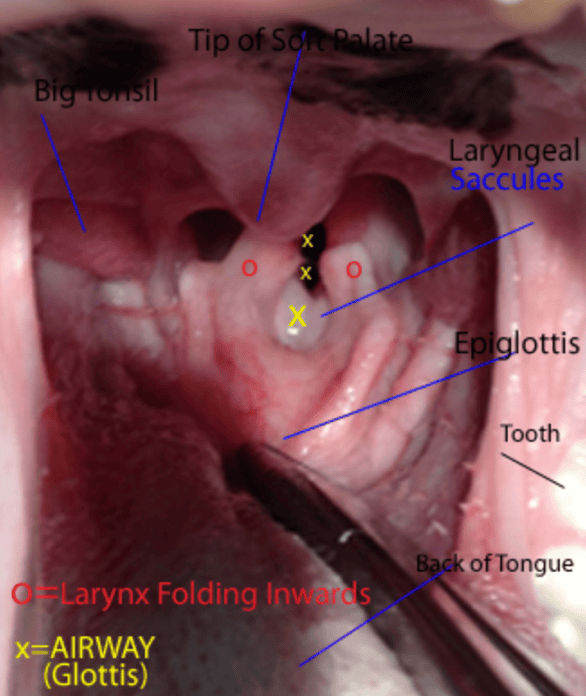
Photo credit – Tobias & Johnston Veterinary Surgery Small Animal
Laryngeal collapse is the most severe form of airway obstruction and has 3 stages:
- Stage 1: everted laryngeal saccules
- Stage 2: partial collapse of the cartilages of the voice box
- Stage 3: complete collapse of the cartilages of the voice box
While laryngeal collapse is a secondary change it can also be seen in puppies in severely affected dogs.
Clinical signs of brachycephalic obstructive airway syndrome include various degrees of dyspnea (trouble breathing), snoring (while most brachycephalic dogs do this, it is import to understand that snoring isn’t normal), stridor (high pitched/whistling sound due to breathing through a very narrow opening), exercise intolerance, heat intolerance, cyanosis (blue tongue and gums from lack of oxygen), syncope and collapse, regurgitation and vomiting.
Because the associated clinical signs seen with brachycephalic patients are very common, they are often normalized and owners often do not realize how affected their pets are.
English Bulldogs, for example, have often prolonged periods with oxygen saturation of less than 90% during sleep, similar to sleep apnea in people.
We also know that the severity of the gastrointestinal signs is directly related to the airway disease. Brachycephalic patients often vomit or regurgitate, which makes them more prone to aspiration pneumonia (a piece of food or water goes down the windpipe and into the lungs causing an infection).
Due to their airway issues, brachycephalic patients are also much more likely to develop complications after an anesthetic procedure. The procedure can be any procedure and doesn’t need to be related to airway surgery.
A vicious cycle can start due to pain or fear-induced faster breathing 🡪 increased work of breathing 🡪 increase of negative pressure in the airway 🡪 pulls structures of the upper airway into the airway 🡪 can cause or exacerbate airway collapse or obstruction.
Generally, brachycephalic obstructive airway disease becomes more severe with time and can cause life-threatening obstruction. If your pet shows gagging, coughing, exercise intolerance, or difficulty breathing, then surgery may be necessary. It is best to surgically address anatomic abnormalities early on to reduce risk for advancing to laryngeal collapse.
Unfortunately, only some issues can be corrected. The most commonly addressed issues are the elongated soft palate, the stenotic nares, and everted laryngeal saccules. Surgical resection of aberrant turbinates can also be beneficial in certain cases and currently research is looking into reducing the size of the tongue.
Pets must be monitored very closely immediately after surgery. Significant inflammation or bleeding can obstruct the airway, making breathing difficult or impossible. Occasionally, a tube must be placed and maintained through an incision in the neck into the trachea (temporary tracheostomy) until the swelling in the throat subsides enough that the pet can breathe normally.
The prognosis is often good for young animals. They generally will breathe much easier and with significantly reduced respiratory distress. Their activity level can markedly improve.
Older animals may have a less favorable prognosis, or patients in whom the process of laryngeal collapse has already started. If the laryngeal collapse is advanced, the prognosis is poor and surgical options are limited and can have significant complications.
Lifestyle changes are recommended for any brachycepalic patient. This includes wearing a harness instead of a collar to reduce neck strain. During the summer, walks and other physical activity should be performed mostly during the colder morning or evening hours only. In addition, calming medications such as Trazodone can be given on an as needed basis and/or 90 minutes prior to an event that excites the dog to help reduce excessive breathing strain.
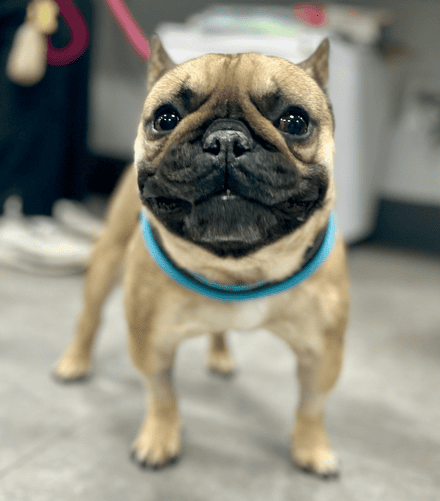
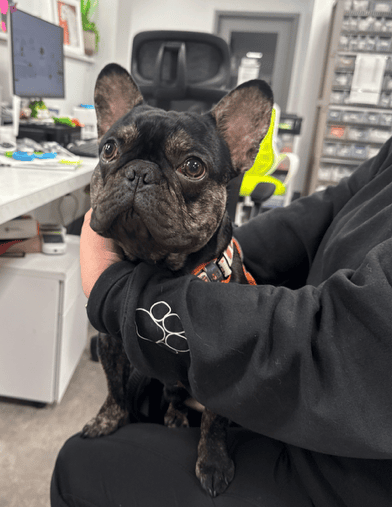
If you have a brachycephalic pet and you are noting labored or noisy breathing, exercise or heat intolerance, gagging, coughing, collapse, or blue-tinged gums, these are signs that should not be ignored. Bring them to a 24/7 emergency veterinary hospital immediately, where calming medications can be given along with oxygen therapy to help stabilize their breathing. Early recognition and intervention can make a significant difference in your pet’s outcome. Our board-certified surgeon, Dr. Michaela Gruenheid, offers consultations and sedated airway examinations to help diagnose and assess the severity of airway disease. Dr. Gruenheid is trained and skilled in BOAS surgery and can help determine whether your pet may benefit from surgical correction to improve their breathing and quality of life.